All posts tagged: art

New Collection Launch – March 2016

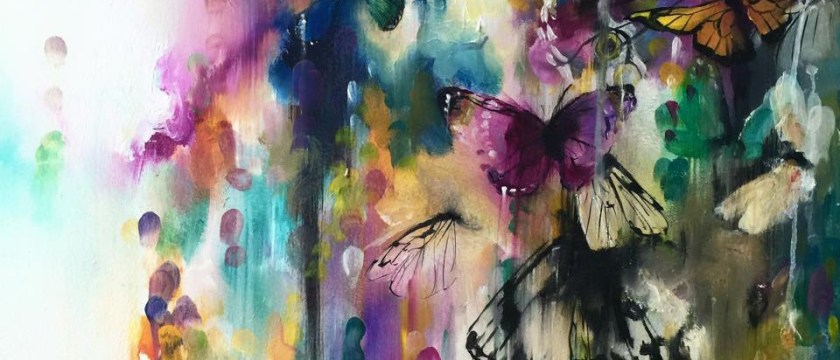
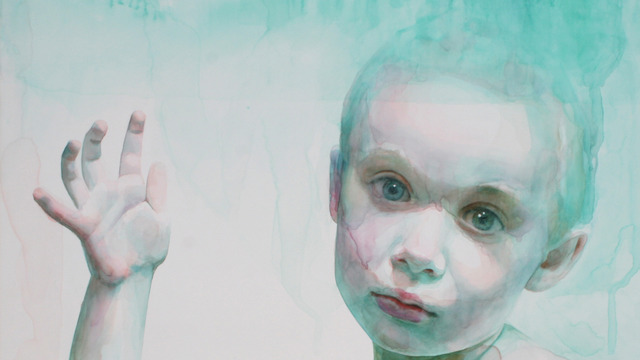
As mentioned in a previous post, I have been working lately on a new collection due to be released in spring 2016. I did not waste a moment before diving straight into a batch of pristine white, blank canvases and making as much mess as possible. I am currently knee deep in what is one of my largest collections to date, and no one can save me now.. (Go on without me!) As the paintings have developed and taken shape, I have become increasingly excited to show people what I have been working solidly on, and not being able to show any of it yet is painfully difficult! However a date is now set for the launch of this upcoming collection. I am very excited that Robertson Fine Art in Edinburgh will be showing my entire collection of originals from March 25th 2016. I will be at the venue on Friday 25th March evening from 6pm, and on Saturday 26th from 10am. Thank you Robertson Fine Art for undertaking my mammoth collection! I am beyond excited …

New Collection / Spring 2016

One of the most beneficial ways for me to work, on a personal level, is to produce a ‘body of work.’ It has been a while since I have worked solidly on a collection of paintings. The Phosphenes Collection was released in spring 2015, which led to a period of being inundated with commission requests, following on from Phosphenes and the Spectrum Collection. (Released Oct 2014) In between this influx of work I have managed to work on subjects and styles that I couldn’t hold back on trying in order to keep up my own personal rate of progression and creativity,  peppering small boutique collections of Limited Edition prints throughout the year. With commission waiting lists reaching up to 12 months for an original, it can become increasingly hard to expand and grow with your style and improve on your talent. Commissions can hold a different type of creative beauty in having a framework to adjust to make your own. If the subject is chosen, or a certain size or shape canvas is necessary, then working to fit these …

Ali Cavanaugh – Watercolour Artist

Out of so many artists whose work I find so compelling and inspiring, the watercolours of Ali Cavanaugh are one of my favourites.  One particular subject will always remain on my agenda because of what it means to get that subject right. This is figurative and portraiture. As humans we connect easily with a face, much like facial recognition technology, our brains similarly make connections and readings when we see a face. Faces are something we are almost too familiar with and in art if there is a mistake proportionately then it is clear to an onlooker in an instant. Proportion isn’t always the aim, abstraction artists often paint portraiture, there is so much to read that doesn’t always have to transfer immaculately across as clear as a photograph. Abstraction in portraiture can still capture other things,  we can gauge moods and emotions from slight turns in the many muscles that support the face. Whatever the style of work or agenda, with faces, something has to be ‘right’ for us to be able to relate. Portraits …

Why doodling is so important.

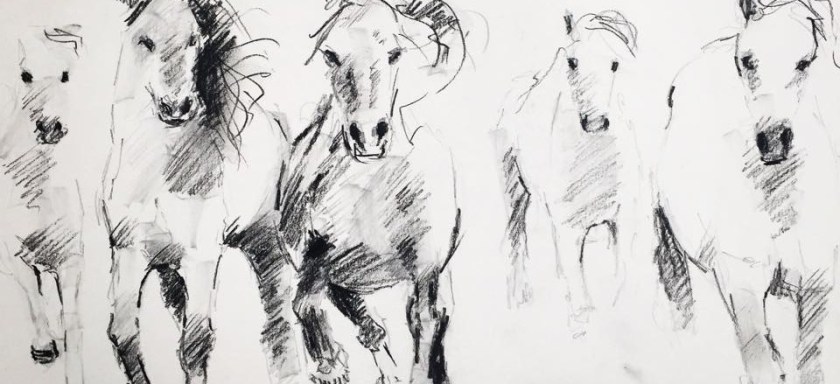
Every morning when I have a long stretch of painting ahead of me I find it beneficial to doodle before I start anything else. I started sketching as a warm up last year and I found that it kick started something in my brain which made my painting flow much easier. For anything that requires any artistic dimension, drawing is one of the fundamentals to the practice. I have known painters, sculptors, architects, designers and jewellers, and although their finished products are rarely a physical drawing, drawings formed the basics of their work and feature at some point in the process. Despite all of the technology needed for the varying careers that rely on some artistic licence, there is something raw and direct about a drawing that photoshop or CAD just can’t meet with. There is an amazing quality to seeing a sketched logo design with construction marks showing, jewelley designs on graph paper, or raw and fast architectural studies in sketchbooks. Being able to draw out what you see in your mind is a way of …

Exhibiting at Smart Gallery – Redbrick

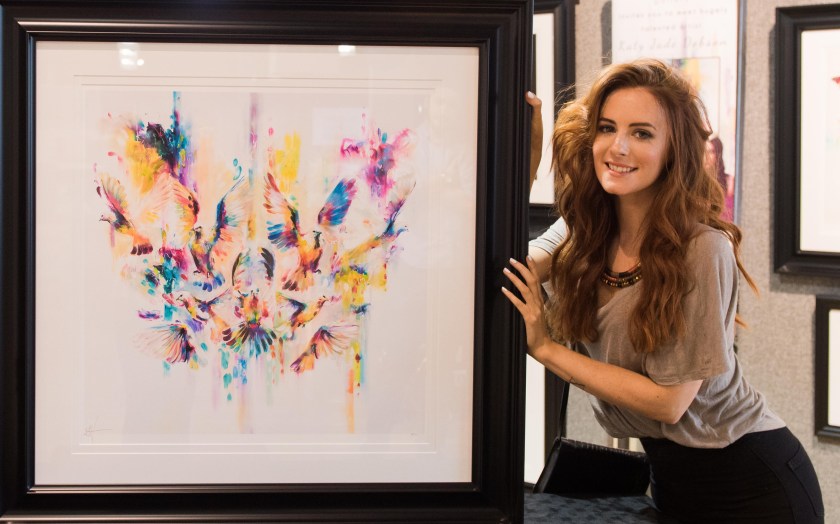
In September I made my way to Smart Gallery in Leeds where they were showing a few originals, some new and unveiled on the day, and exclusive new limited edition prints. It is always a lot of fun to meet you all at these shows and get to speak to you one on one about my work and this one was no exception. It was great to see so many people and get a chance to speak to most of you about the prints and originals that you had bought. I then got to be nosey and ask where in your home you might hang them, what other artist’s you collect, why you like my work etc. Thanks a lot for coming and having a chat! It was lovely to meet you! The gallery was beautifully curated by the talented staff who made the event run smoothly and a lot of fun. I highly recommend Smart Gallery as an official stockist of my work, they have a beautiful gallery as home to other artists who …

Plagiarism in Art – An Artist’s Perspective

To help me shape this Pandora’s Box of a topic,  I have spoken at length to other artists and people who work with their own creative content. This scope is large and can span over many varying careers. But the answer we all seemed to agree on was the same. In the nature of all creative content, originality is a fleeting concept. If the idea has already been done unbeknownst to you, then it may about to be done, unbeknownst to them. This is my perspective, with opinions peppered through that I have learnt along on the way to writing this. I began using this blog as part of a project for my 3rd year of my Art Degree; under the instructions to show that you could create an online space that held information about your work. I noticed that I could increase the footfall towards my page. Then in 2013 I took social media platforms more seriously after finding them to be a great place to share my paintings and garner views and interest in my …

‘Flutter’ Limited Edition Prints

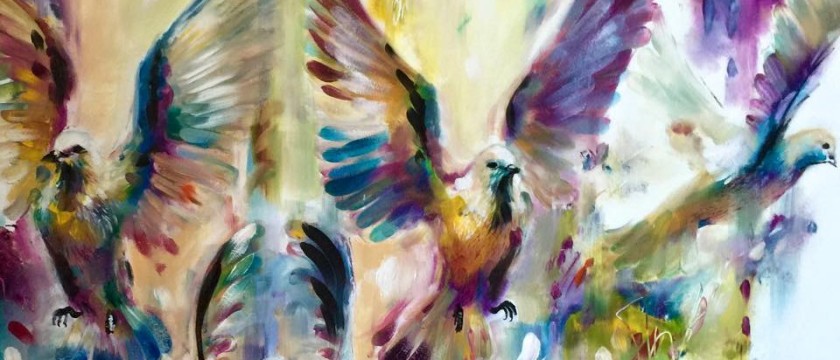
A common question that I am asked is the distinction between ‘finishing or abandoning’ a painting (in terms of completing work) and which one applies to me?  There are two very different feelings when a painting is complete and is at most an unpredictable part of the process for me. Occasionally my idea is crystal clear enough to see when the finished version is in sight, or be unable to stop until I meet this mark in my mind. This is finishing the work that you set out with a cause, process and visual in mind. Abandoning the painting is a very different but equally as satisfying feeling, in when you reach a stage in the work where you feel it is right to stop. For whatever reason, it may be that the balance is right and anything more could be overworking it. Maybe you feel that what you are trying to put across has been successful and in going further could potentially spoil that. A number of reasons, even just that it ‘feels’ right to …

‘Talent is a pursued interest’ / My Personal Artistic Evolution

A few years ago I had never painted with oil paints. I used paints (watercolour or acrylics) to splash some colour onto my mainly charcoal sketched pieces. The image below shows the work I had for sale at a stall in an art fair in 2012. After a closer look I saw so many familiarities with the work I used to create and what I paint now. There are abstract birds in flight, loose portraits, proud stags, elephants and dripping florals. I realised that your work doesn’t change over time, it only evolves as you progress. My decision to move to oil paints was based largely on the opportunities that they hold with colour. Being such a malleable material with so much depth to play around with, you can create any style or look that you want to achieve with the right techniques. Back before I taught myself to use oil paints I loved incredibly loose work that oozed energy and movement above all else. I wanted to show the construction marks and leave them raw and …

Micheal Zavros / Inspiration

Just a quick internet search can tell you that there is no end to the amount of talented artists in the world. Instagram in particular has been great for unearthing these exquisitely talented humans who happen to document their creations and I love to ‘follow’ them. There is an infinite amount of inspiration that you can gain from looking at and enjoying the work of others, without copying/plagiarising. (A post about this topic in particular to be uploaded soon..) Taking inspiration isn’t about stealing, or at least shouldn’t be! It is noting the feeling you get when you see a particular piece of art and translating that into your own work in your own way. A painting might have an electric energy with movement that leaps out at you. Another might have solemn or moody overtones that gave you a sense of atmosphere when you looked at it. It is more often than not the ‘vibe’ of the painting that you most likely enjoyed. Inspiration should be transferring that feeling/vibe/energy in your own way, to …

Jellyfish Art / Oil Painting

It took a lot of preparation before I decided to take on jellyfish as a subject for an oil painting. Before tackling the big decisions you make before you start a painting (composition, texture, colour palette, tones etc) it seemed important to get a better understanding of jellyfish. Are they often alone or in groups? (Which I found to be named a ‘Plume’ when they migrated and gathered together) How do they move? At what speed? What different positions would you find their tentacles to be in? And which movement does this represent? The only way to really find out was to watch them, thanks to YouTube! There is something so peaceful and mesmerising about watching jellyfish, the way they pulsate their gelatinous bodies for locomotion and the tentacles fan out so elegantly. It was apparent immediately that the movement was the most important aspect to capture within a painting. For the fished pieces ‘Bloom’ and ‘Plume’ I used oil paints (as always) onto primed wooden panels. The most interesting part of the process for …